Reflections on the Daily Readings 23rd August 2021
Webmaster • August 20, 2021

Monday 23rd August


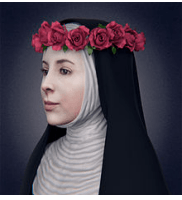
Memorial Of Rose Of Lima,

Family finesse


Parents have expectations of their kids, and kids want to make their own choices—it’s part of the painful growing-up process. Rose of Lima was like a lot of teenagers who clashed with her parents about her future, and she was like a lot of saints who rankled family by refusing to marry. They never let her join a convent, but they didn’t force her to wed either, finally relenting to her choice of chastity. She lived out her brief life as she had wished, in prayer and penance. She is the patron saint of family problems. Everyone has them, so ask Rose for help.


Today's readings: 1 Thessalonians 1:1-5, 8b-10; Matthew 23:13-22

“One who swears by heaven swears by the throne of God.”


Tuesday 24th August


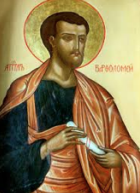
Feast Of Bartholomew,

Apostle Play a stirring role


Bartholomew, also called Nathanael, was one of the original 12 apostles and later, a traveling missionary. He embodied what it means to become a missionary disciple—one who, upon being led to Jesus, wishes to lead others to him, too. As the U.S. bishops say in Go and Make Disciples, Jesus “gave the Church the unending task of evangelizing as a restless power, to stir and to stimulate.” Where can you stir interest in Jesus today?


Today's readings: Revelation 21:9b-14; John 1:45-51 (629).

“Rabbi, you are the Son of God; you are the King of Israel.”


Wednesday 25th August


The past is present


Today, we are becoming aware of the deep truth that wrongs committed in the past, even generations ago, can still perpetuate evil. Such is the sin of racism, which the U.S. Catholic Bishops have repeatedly called “an evil which endures in our society and in our Church” (Brothers and Sisters to Us). Each of us is called to help dismantle racism, to reject profiting from the oppression of others, and to listen to the voices of those who have been silenced too long—for the sake of our past, present, and future.


Today's readings: 1 Thessalonians 2:9-13; Matthew 23:27-32 (427).

“You are like whitewashed tombs.”


Thursday 26th August


Be alert!


Wakefulness is a term often used in spiritual writing. In today’s gospel, Jesus tells his disciples, “Stay awake! You do not know on which day your Lord will come.” The Catechism of the Catholic Church contains at least 20 references to being awake, usually in regard to “awakening faith.” The church wants its members to be vigilant and tells us in the catechism that the “Holy Spirit constantly seeks to awaken us to keep watch!” Ask the Holy Spirit to help you awaken to God’s presence today.


Today's readings: 1 Thessalonians 3:7-13; Matthew 24:42-51 (428).

“Jesus said to his disciples: ‘Stay awake!’”

Friday 27th August


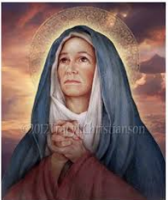
Memorial Of Monica

Hang in there


Sometimes it feels like all of our small choices and actions will never amount to anything. Go big or go home, we’re told. Yet the stuff of transformation, healing, and love is knitted together one small thing at a time. Our call is to have faith and persist. Take a look at Saint Monica, a laywoman from North Africa, who day in and day out offered “small” acts of kindness, love, and care for her beloved yet wayward son Augustine. She never tired of believing in him, even storming heaven on his behalf. Persisting in the small things that are good, beautiful, and true can make a big difference. What small things are you called to persist in?

Today's readings: 1 Thessalonians 4:1-8; Matthew 25:1-13 (429).

“Stay awake.”


Saturday 14th August


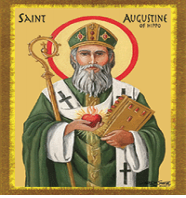
Memorial Of Augustine

Let happiness be your song


Like all larger-than-life historical figures, Saint Augustine and his legacy are subject to debate. Some find in his vast work reason to take a pessimistic view of humanity. But he was quite life-affirming in his conviction that the happiness found in following God is indeed the only worthy and lasting happiness. “Happy is [the one] who has God,” he succinctly put it. To “have” God for Augustine meant to love God, citing Psalm 72: “For me it is good to cling to God.” Or, as Pharrell Williams put it in his blockbuster song “Happy” a few years back, “Clap along if you feel like happiness is the truth.”


Today's readings: 1 Thessalonians 4:9-11; Matthew 25:14-30 (430).

“You yourselves have been taught by God to love one another.”


By Webmaster May 8, 2026
Please pray for Our Sick : Margaret Callaghan Doreen Cleary, Neil Boyle, John Rielly Molly Strang, James Clark, Fr. Michael McLaughlin, Patricia Henderson, Joanna Maier (Connecticut USA), Therese Gilgunn Tressy Callaghan, Suzanne McMurray, Mary Coyle, Lesley Watson (Spain) Maureen McHugh,Margaret Burke, Marie White, Kathleen Daly, John McGuire, Jill Brown, Karen Pritchatt, Louise Newton, Faith Lyndsey, Jill Brown, Marie McGuire, James Morton, Paul Kearney, Thomas Daly, Andrew McCluskey, Premature Baby Vincent McDowell, Bill Allan, Gudren Berk (Germany), Jaqueline McReynolds, Mary Morrison, Helen Howarth (Easterhouse), Margaret Loan, Avril McCluskey, Carol Corr, Thomas Kennedy, and all our sick .
By Webmaster May 8, 2026
Thursday 14th May Times of Masses Wednesday 13th Vigil 6pm  Thursday 14th May 7am & 10am
By Webmaster May 8, 2026
Our Recently Dead Marion Allan (Blantyre) Anne Maxwell (McLernon), Michael Gates (Canada) Patricia Corrigan (Baillieston), Month Minds & Anniversaries Barbara Holton, Elizabeth Quinn, Antonio De Marco, James & Sarah Mohan, Hugh Kennedy, Isabel Wedlock, Susan Jamieson, John Moran, John McPolland (Snr), Teresa & Tommy Sweeney, Frankie McCann Please if you could make sure all month minds and anniversaries are handed in no later than Wednesday Night. If they come in after that they will be read out at Mass on Sunday. If the recently dead come in after the Wednesday deadline they too will be read out at Mass on the Sunday
By Webmaster May 8, 2026
I am also looking for Volunteers to move the power-points on during the Sunday Masses, Vigil 4pm, 9.30am & 11am. It is very easy to operate, if we get enough volunteers for each Mass we would put a wee rota together. It would take a wee bit of pressure off me.
By Webmaster April 10, 2026
First Reading Acts of the Apostles 2:42-47 The first community of Christians grows as its members meet to pray and break bread. Responsorial Psalm Psalm 118:2-4,13-15,22-24 God’s love is everlasting. Second Reading 1 Peter 1:3-9 We have new hope because of Jesus’ Resurrection. Gospel Reading John 20:19-31 Thomas believes because he sees Jesus. Background on the Gospel Reading The Gospels tell us that Jesus appeared to the disciples on several occasions after they discovered that his tomb was empty. Part of the mystery of Jesus’ Resurrection is that he appeared to his disciples not as a spirit but in bodily form. The bodily form was not one that the disciples recognized though. In John’s Gospel, Mary of Magdala does not recognize that the figure standing before her is Jesus until he speaks to her. In Luke’s Gospel the disciples who meet Jesus on the road to Emmaus do not recognize him until he breaks bread with them. The resurrected Jesus had a physical presence, but the disciples couldn’t recognize Jesus unless he allowed them to. His resurrected body, nonetheless, showed the marks of his crucifixion. From readings such as today’s Gospel, we also see that in his resurrected body, Jesus seems to be free of physical constraints. He appears to the disciples despite the fact that the doors were locked. Jesus greets his disciples with the gift of peace and the gift of the Holy Spirit. In doing so, Jesus commissions his disciples to continue the work that he has begun: “As the Father has sent me, so I send you.” During the meeting, Jesus also shows the integral connection between forgiveness of sins and the gift of the Holy Spirit. The story of Thomas illustrates our Christian experience today: We are called to believe without seeing. In fact, all Christians after the first witnesses have been called to believe without seeing. Thomas’s doubt is hardly surprising; the news of Jesus’ appearance was incredible to the disciples who had seen him crucified and buried. Thomas’s human nature compelled him to want hard evidence that the Jesus who appeared to the disciples after his death was indeed the same Jesus who had been crucified. Thomas is given the opportunity to act on that desire. He is our witness that Jesus is really risen.  Our faith is based on the witness of the Church that has preceded us, beginning with Thomas and the first disciples. Through Baptism we receive the same Holy Spirit that Jesus brought to the first disciples. We are among those who are “blessed” because we believe without having seen.
By Webmaster April 10, 2026
Friday 24th April 2026 Price of Tickets £15 In aid of The John Fallon Fund for building a school in South Sudan. This is a great charity to support. It will help so many children to get an education. The school will be called "The 12th Lion." See Anne Frances
By Webmaster March 27, 2026
There will be an plenty of opportunity for you to go to Confession before Easter. Tuesday & Wednesday 9.30-9.50am 6pm-7pm  Fr. O'Farrell will be here: Weds 6.30pm - 7.30pm I will be up in Our Lady & St. Anne's: Weds 6.30pm - 7.30pm
By Webmaster March 27, 2026
Palm Sunday is celebrated on the Sunday before Easter each year and marks the start of Holy Week. But what is the actual significance of this Holy Day, and how does it play a part in the greater story of Christ’s life, death, and resurrection? The Palm Sunday Account Jesus was on His way to Jerusalem with His disciples to celebrate Passover. When they reached the Mount of Olives, He sent two of the disciples to retrieve a donkey colt for Him to ride. He instructed them to untie it, and if anyone asked them why they were doing so, to tell them that the Master has need of it. They did as He instructed, and brought the colt to Him, laying their cloaks over it for Him to sit on it. As He rode into the city, people spread their cloaks and palm branches in the road, proclaiming, “Hosanna! Blessed is he who comes in the name of the Lord!” The spectacle attracted the attention of those in the city, and many wondered who He was. The entry into Jerusalem is documented in all four gospels, with slight variations in each account.  Today, the celebration of Palm Sunday opens Holy Week. The priest blesses palms and distributes them to the congregation. The palms are either kept and used as a reminder of Christ’s victory throughout the year, or are burned and used as the ashes for the next year’s Ash Wednesday service.
By Webmaster March 27, 2026
First Reading Isaiah 50:4-7 The Lord’s Servant will stand firm, even when persecuted. Responsorial Psalm Psalm 22:8-9,17-20,23-24 A cry for help to the Lord in the face of evildoers Second Reading Philippians 2:6-11 Christ was obedient even to death, and God has exalted him. Gospel Reading Matthew 26:14—27:66 Jesus is crucified, and his body is placed in the tomb. (shorter form: Matthew 27:11-54) Background on the Gospel Reading Today we begin Holy Week, the days during which we journey with Jesus on his way of the cross and anticipate his Resurrection on Easter. Today’s liturgy begins with the procession with palms to remind us of Jesus’ triumphant entrance into Jerusalem. The events of Jesus’ Passion are proclaimed in their entirety in today’s Liturgy of the Word. Those events will be proclaimed again when we celebrate the liturgies of the Triduum—Holy Thursday’s Mass of the Lord’s Supper, the Good Friday of the Lord’s Passion, and the Easter Vigil. In communities that celebrate the Sacraments of Initiation with catechumens, these liturgies take on special importance because they invite the catechumens and the community to enter together into the central mysteries of our faith. These days are indeed profound and holy. In Cycle A, we read the Passion of Jesus as found in the Gospel of Matthew on Palm, or Passion, Sunday. (On Good Friday, we will read the Passion of Jesus from the Gospel of John). The story of Jesus’ Passion and death in Matthew’s Gospel focuses particularly on the obedience of Jesus to the will of his Father. As Jesus sends his disciples to prepare for Passover, he indicates that the events to come are the will of the Father (Matthew 26:18). In Jesus’ prayer in the garden, he prays three times to the Father to take away the cup of suffering, but each time, Jesus concludes by affirming his obedience to the Father’s will (Matthew 26:39-44). Even Matthew’s description of Jesus’ death shows Jesus’ obedience to the Father. Another theme of Matthew’s Gospel is to show Jesus as the fulfillment of Scripture. Throughout the Passion narrative, Matthew cites and alludes to Scripture to show that the events of Jesus’ Passion and death are in accordance with all that was foretold. And if the events were foretold, then God is in control. In addition, Matthew is particularly concerned that the reader does not miss the fact that Jesus is the Suffering Servant of the Old Testament. Jesus acts in obedience to the Father even in death, so that sins may be forgiven. Matthew makes this clear in the story of the Lord’s Supper. As Jesus blesses the chalice, he says: “. . . for this is my blood of the covenant, which will be shed on behalf of many for the forgiveness of sins.” (Matthew 26:28) While the Gospels of Matthew and Mark have many parallels in their narrative of the Passion, there are a few details worth noting that are unique to Matthew. Only Matthew indicates the price paid to Judas for betraying Jesus. The story of Judas’s death is also found only in Matthew, as is the detail that Pilate’s wife received a warning in a dream and that Pilate washed his hands of Jesus’ death. Finally, Matthew’s Gospel alone mentions the earthquakes and other phenomena that happened after Jesus’ death. Matthew places the responsibility for Jesus’ death on the Sanhedrin, the chief priests and elders who were responsible for the Temple. However, the animosity that those Jewish leaders and the Jewish people demonstrate toward Jesus is not to be interpreted in ways that blame the Jewish people for Jesus’ death. Throughout Matthew’s Gospel, the narrative reflects the tension that probably existed between the early Christian community and their Jewish contemporaries. At the Second Vatican Council, the Council Fathers made clear that all sinners share responsibility for the suffering and death of Jesus and that it is wrong to place blame for Jesus’ Passion on the Jewish contemporaries of Jesus or on Jewish people today. There are many vantage points from which to engage in Jesus’ Passion. In the characters of Matthew’s Gospel, we find reflections of ourselves and the many ways in which we sometimes respond to Jesus. Sometimes we are like Judas, who betrays Jesus and comes to regret it. We are sometimes like Peter, who denies him, or like the disciples, who fell asleep during Jesus’ darkest hour but then act rashly and violently at his arrest. Sometimes we are like Simon, who is pressed into service to help Jesus carry his cross. Sometimes we are like the leaders who fear Jesus or like Pontius Pilate, who washed his hands of the whole affair. Jesus dies so that our sins will be forgiven. The events of Jesus’ Passion, death, and Resurrection are called the Paschal Mystery. No amount of study will exhaust or explain the depth of love that Jesus showed in offering this sacrifice for us. After we have examined and studied the stories we have received about these events, we are left with one final task—to meditate on these events and on the forgiveness that Jesus’ obedience won for us.
By Webmaster March 27, 2026
I want to thank everyone who handed in to the Food Bank this week. Your kindness is amazing.  This weekend will be the last weekend you can hand in Easter Eggs, so they can be given out for next weekend.
Show More