Reflections on the Daily Readings 21st June 2021
Webmaster • June 20, 2021

Monday 21st June


Memorial Of Aloysius Gonzaga Religious

Sometimes you have to swim upstream


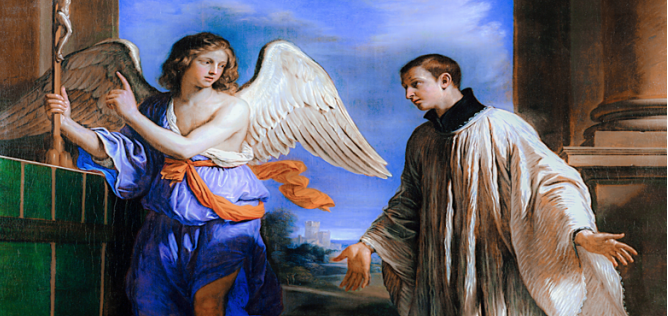
Discerning one’s vocation can be tricky enough, but once you've figured out God’s call, you might encounter resistance from others in answering it. Saint Aloysius Gonzaga can relate. As an aristocrat in Renaissance Italy, he was expected to join decadent courtly life and have an accomplished military career. But even in his early teens, Aloysius was dismayed by the violence and licentiousness of his time. Deeply devout, he bucked family and societal expectations and sought a different path. He renounced his inheritance and became a Jesuit. When we encounter pressure to ignore God, may Aloysius help us all stay true.


Today's readings: Genesis 12:1-9; Matthew 7:1-5 (371). “The measure with which you measure will be measured out to you.”

Tuesday 22nd June


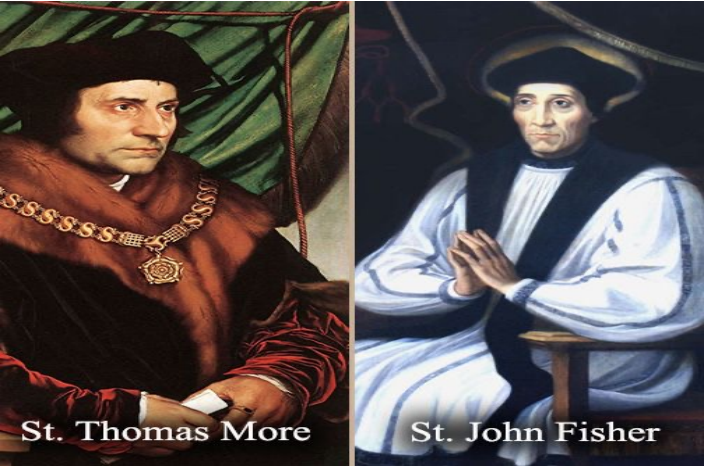
Memorial Of John Fisher, Bishop & Thomas More, Martyrs

Truth trumps tyranny


Thomas More shares this feast day with John Fisher—both beheaded for daring to cross England’s King Henry VIII in his power grab. Significantly, Henry moved up Fisher’s execution day so it wouldn’t fall on the feast of another sainted John—John the Baptist, who likewise was beheaded by a king for opposing royal tyranny. It’s always the right time to speak truth to power, even when the cost is high.


Today's readings: Genesis 13:2, 5-18; Matthew 7:6, 12-14 (372). “Enter through the narrow gate; for the gate is wide and the road broad that leads to destruction."


Wednesday 23rd June


Let’s make the world a better place

Today the United Nations celebrates Public Service Day to honor the public servants who selflessly work to promote the common good. Each of us, however, is called to make the world a better place through service. As Pope Francis says in Fratelli Tutti: Service means caring “for the vulnerable members of our families, our society, our people . . . Service always looks to their faces, touches their flesh, senses their closeness . . . and tries to help them." Whether as emergency responders, sanitation workers, public advocates, teachers, community volunteers, or whatever your vocation or profession may be, take the opportunity to recognize the humanity of the vulnerable and offer your help.


Today's readings: Genesis 15:1-12, 17-18; Matthew 7:15-20 (373). “So by their fruits you will know them.”
Thursday 24th June


Solemnity Of The Nativity Of Saint John The Baptist

Catch fire


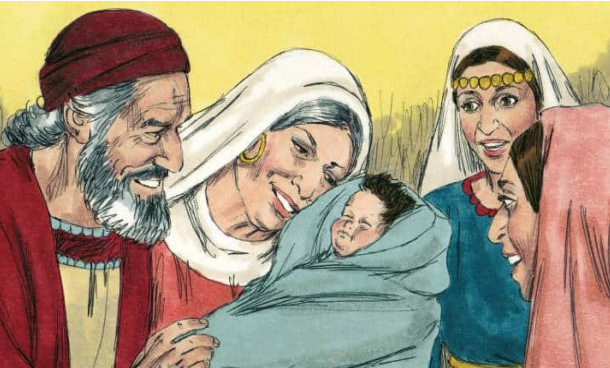
Although Catholics in general don’t tend to make a fuss over the Nativity of John the Baptist, today’s solemnity is one of the church’s earliest, and it used to be widely celebrated in Europe with bonfires and outdoor festivities. Some regions still hold celebrations for John, who prepared humanity for the coming of Christ. The bonfires recognize the fire within this zealous, outspoken saint. Do you harbour a fire for Christ? If your passion has ebbed, pray to Saint John the Baptist to intercede that you might reignite your fire for the kingdom of God.


Today's readings: Day: Isaiah 49:1-6; Acts 13:22-26; Luke 1:57-66, 80 (587). “He asked for a tablet and wrote, ‘John is his name.’ ”


Friday 25th June


Confirm your spiritual identity


Most seventh-graders are thrilled by two things about Confirmation: the possibility of having a tongue of fire hover over their heads and choosing a new name. It’s not that anything is necessarily wrong with their given names, but it seems awesome to choose one’s very own name. Many spiritual traditions and rites employ the custom of taking a new name, signifying a new moment in our life with God. Though a sacrament and public witness in the church, Confirmation is also a personal confirmation of our own selves as unique and beloved of God. What can you do today to confirm your relationship with God?


Today's readings: Genesis 17:1, 9-10, 15-22; Matthew 8:1-4 (375). “Do not call her Sarai; her name shall be Sarah. I will bless her.”


Saturday 26th June


We are worthy of healing


In these divisive times, it is heartening to have examples of the healing power of a word. The gospels tell the story of a centurion, a powerful military leader of the Roman army that occupied Jewish lands, who had such great faith in Jesus that he only needed Jesus to speak a healing word. No ordinary centurion, this fellow had 7 been a great friend of the Jewish people of Capernaum, even building their synagogue. Where are such examples today? Speak a word of healing across all that seems to divide: across the aisle, the religions, the races and ethnicities, the neighbourhoods, languages, genders, and sexualities that distinguish us but do not have to divide us. Only say the word and healing shall begin.


Today's readings: Genesis 18:1-15; Matthew 8:5-17 (376). “Only say the word and my servant will be healed.”

By Webmaster March 27, 2026
Please pray for Our Sick : Margaret Callaghan Doreen Cleary, Neil Boyle, John Rielly Molly Strang, James Clark, Fr. Michael McLaughlin, Patricia Henderson, Joanna Maier (Connecticut USA), Therese Gilgunn Tressy Callaghan, Suzanne McMurray, Mary Coyle, Lesley Watson (Spain) Maureen McHugh, Margaret Burke, Marie White, Kathleen Daly, John McGuire, Jill Brown, Karen Pritchatt, Louise Newton, Faith Lyndsey, Jill Brown, Marie McGuire, James Morton, Paul Kearney, Thomas Daly, Andrew McCluskey, Premature Baby Vincent McDowell, Bill Allan, Gudren Berk (Germany), Jaqueline McReynolds, Mary Morrison, Helen Howarth (Easterhouse), Margaret Loan, Avril McCluskey, Elizabeth Miller, Carol Corr Peter McGilvary, Robert Smith and all our sick.
By Webmaster March 27, 2026
There will be an plenty of opportunity for you to go to Confession before Easter. Tuesday & Wednesday 9.30-9.50am 6pm-7pm  Fr. O'Farrell will be here: Weds 6.30pm - 7.30pm I will be up in Our Lady & St. Anne's: Weds 6.30pm - 7.30pm
By Webmaster March 27, 2026
Palm Sunday is celebrated on the Sunday before Easter each year and marks the start of Holy Week. But what is the actual significance of this Holy Day, and how does it play a part in the greater story of Christ’s life, death, and resurrection? The Palm Sunday Account Jesus was on His way to Jerusalem with His disciples to celebrate Passover. When they reached the Mount of Olives, He sent two of the disciples to retrieve a donkey colt for Him to ride. He instructed them to untie it, and if anyone asked them why they were doing so, to tell them that the Master has need of it. They did as He instructed, and brought the colt to Him, laying their cloaks over it for Him to sit on it. As He rode into the city, people spread their cloaks and palm branches in the road, proclaiming, “Hosanna! Blessed is he who comes in the name of the Lord!” The spectacle attracted the attention of those in the city, and many wondered who He was. The entry into Jerusalem is documented in all four gospels, with slight variations in each account.  Today, the celebration of Palm Sunday opens Holy Week. The priest blesses palms and distributes them to the congregation. The palms are either kept and used as a reminder of Christ’s victory throughout the year, or are burned and used as the ashes for the next year’s Ash Wednesday service.
By Webmaster March 27, 2026
First Reading Isaiah 50:4-7 The Lord’s Servant will stand firm, even when persecuted. Responsorial Psalm Psalm 22:8-9,17-20,23-24 A cry for help to the Lord in the face of evildoers Second Reading Philippians 2:6-11 Christ was obedient even to death, and God has exalted him. Gospel Reading Matthew 26:14—27:66 Jesus is crucified, and his body is placed in the tomb. (shorter form: Matthew 27:11-54) Background on the Gospel Reading Today we begin Holy Week, the days during which we journey with Jesus on his way of the cross and anticipate his Resurrection on Easter. Today’s liturgy begins with the procession with palms to remind us of Jesus’ triumphant entrance into Jerusalem. The events of Jesus’ Passion are proclaimed in their entirety in today’s Liturgy of the Word. Those events will be proclaimed again when we celebrate the liturgies of the Triduum—Holy Thursday’s Mass of the Lord’s Supper, the Good Friday of the Lord’s Passion, and the Easter Vigil. In communities that celebrate the Sacraments of Initiation with catechumens, these liturgies take on special importance because they invite the catechumens and the community to enter together into the central mysteries of our faith. These days are indeed profound and holy. In Cycle A, we read the Passion of Jesus as found in the Gospel of Matthew on Palm, or Passion, Sunday. (On Good Friday, we will read the Passion of Jesus from the Gospel of John). The story of Jesus’ Passion and death in Matthew’s Gospel focuses particularly on the obedience of Jesus to the will of his Father. As Jesus sends his disciples to prepare for Passover, he indicates that the events to come are the will of the Father (Matthew 26:18). In Jesus’ prayer in the garden, he prays three times to the Father to take away the cup of suffering, but each time, Jesus concludes by affirming his obedience to the Father’s will (Matthew 26:39-44). Even Matthew’s description of Jesus’ death shows Jesus’ obedience to the Father. Another theme of Matthew’s Gospel is to show Jesus as the fulfillment of Scripture. Throughout the Passion narrative, Matthew cites and alludes to Scripture to show that the events of Jesus’ Passion and death are in accordance with all that was foretold. And if the events were foretold, then God is in control. In addition, Matthew is particularly concerned that the reader does not miss the fact that Jesus is the Suffering Servant of the Old Testament. Jesus acts in obedience to the Father even in death, so that sins may be forgiven. Matthew makes this clear in the story of the Lord’s Supper. As Jesus blesses the chalice, he says: “. . . for this is my blood of the covenant, which will be shed on behalf of many for the forgiveness of sins.” (Matthew 26:28) While the Gospels of Matthew and Mark have many parallels in their narrative of the Passion, there are a few details worth noting that are unique to Matthew. Only Matthew indicates the price paid to Judas for betraying Jesus. The story of Judas’s death is also found only in Matthew, as is the detail that Pilate’s wife received a warning in a dream and that Pilate washed his hands of Jesus’ death. Finally, Matthew’s Gospel alone mentions the earthquakes and other phenomena that happened after Jesus’ death. Matthew places the responsibility for Jesus’ death on the Sanhedrin, the chief priests and elders who were responsible for the Temple. However, the animosity that those Jewish leaders and the Jewish people demonstrate toward Jesus is not to be interpreted in ways that blame the Jewish people for Jesus’ death. Throughout Matthew’s Gospel, the narrative reflects the tension that probably existed between the early Christian community and their Jewish contemporaries. At the Second Vatican Council, the Council Fathers made clear that all sinners share responsibility for the suffering and death of Jesus and that it is wrong to place blame for Jesus’ Passion on the Jewish contemporaries of Jesus or on Jewish people today. There are many vantage points from which to engage in Jesus’ Passion. In the characters of Matthew’s Gospel, we find reflections of ourselves and the many ways in which we sometimes respond to Jesus. Sometimes we are like Judas, who betrays Jesus and comes to regret it. We are sometimes like Peter, who denies him, or like the disciples, who fell asleep during Jesus’ darkest hour but then act rashly and violently at his arrest. Sometimes we are like Simon, who is pressed into service to help Jesus carry his cross. Sometimes we are like the leaders who fear Jesus or like Pontius Pilate, who washed his hands of the whole affair. Jesus dies so that our sins will be forgiven. The events of Jesus’ Passion, death, and Resurrection are called the Paschal Mystery. No amount of study will exhaust or explain the depth of love that Jesus showed in offering this sacrifice for us. After we have examined and studied the stories we have received about these events, we are left with one final task—to meditate on these events and on the forgiveness that Jesus’ obedience won for us.
By Webmaster March 27, 2026
I want to thank everyone who handed in to the Food Bank this week. Your kindness is amazing.  This weekend will be the last weekend you can hand in Easter Eggs, so they can be given out for next weekend.
By Webmaster March 27, 2026
Our Recently Dead Helen Hilson, Margaret McAuley, Marion Ward, Janet McCready (Cardowan), Mary Woods, Hugh Urquhart, Irene Marshall Month Minds & Anniversaries Tracey Archibald, John Lyons, Dennis Brown Snr., Dennis Brown Jnr., Mamie Brown, John Corns, Stephen McHugh, Canon Dennis Keane,The McLean Family, The Moran Family, The McLaughlin Family, The Leary Family, Anne Mackie, Baby Noah, Catianna Darragh, Helen Findlater, Gerald Jamieson, Scott Walsh Please if you could make sure all month minds and anniversaries are handed in no later than Wednesday Night. If they come in after that they will be read out at Mass on Sunday. If the recently dead come in after the Wednesday deadline they too will be read out at Mass on the Sunday
By Webmaster March 20, 2026
A Defibrillator will be installed in our front car park. The Scottish Ambulance Service Training will take place on Tuesday 5th May 2026 from 6pm-8pm. If you are interesting in the training contact Fr. Frank asap. It will open to be used by the whole community.
By Webmaster March 20, 2026
Dear Sisters and Brothers in Christ, Following a request from the Holy See, the Bishops of Scotland have been invited to reflect on how the structures of the Church in our country can best serve her mission in the years ahead, specifically whether the present situation of eight dioceses is suitable. We are all aware of the challenges before us — fewer clergy, changing patterns of practice, and increasing pressures on our diocesan resources, among other things. Yet our mission remains unchanged: to proclaim the Gospel and to lead our people to Christ. Two possible pathways are being proposed for careful discernment: developing deeper cooperation and the sharing of resources across dioceses within our present structures, or the merging of some dioceses. In order to best inform ourselves and the Holy See, each bishop will engage with his diocese over the coming months for the first part of this process. Everyone will be given the opportunity to pray, reflect, and contribute. Following-on from the presentation of a discussion paper, responses from each diocese will contribute to the initial findings which will be given to the Holy See in the Autumn. This is not simply an administrative exercise. It is a pastoral and missionary response to our changing landscape. This process will ensure our Church in Scotland will continue to grow ever more missionary, more Christ-centred, and more collaborative in the service of God’s people.  Entrusting this work to the guidance of the Holy Spirit and to the intercession of Our Lady, we move forward together with confidence and renewed hope. The Bishops of Scotland
By Webmaster March 20, 2026
First Reading Ezekiel 37:12-14 God will open the graves and restore the people of Israel. Responsorial Psalm Psalm 130:1-8 With the Lord is forgiveness and mercy. Second Reading Romans 8:8-11 The Spirit of God dwells in you. Gospel Reading John 11:1-45 (shorter version John 11:3-7,17,20-27,33b-45) Jesus raises Lazarus from the dead. Background on the Gospel Reading Our Gospel on this day, the fifth Sunday of Lent, is again taken from the Gospel according to John. The reading from John continues the break from Cycle A’s focus on the Gospel of Matthew. Today’s Gospel reading recounts another sign, or miracle, found in John’s Gospel, the raising of Lazarus. As our catechumens move closer to the celebration of their Baptisms at the Triduum, today’s reading invites us to reflect upon what it means to call Jesus the Resurrection and the life. The context for the story of the raising of Lazarus is the Jewish leaders’ growing animosity toward Jesus. Jesus has been in Jerusalem, taking part in the feast of the Dedication, which we have come to know as Hanukkah. The people have been pressing him to declare plainly whether he is the Messiah. Jesus tells them to look to his works, which testify to his coming from God. Many do not believe Jesus, however, and some try to stone him for blasphemy. Into this scene of confrontation, Mary and Martha, the sisters of Lazarus, send word to Jesus that his friend is ill. Jesus is said to love Mary, Martha, and Lazarus, but he delays his journey for two days. The delay heightens the drama and shows Jesus’ obedience to God, who is to be glorified through Lazarus’s resurrection. When Jesus finally declares that he will journey to Bethany, his disciples fear for his life. Thomas declares that he and the other disciples should prepare to die with Jesus. The scene described at Bethany is a sad one. Martha meets Jesus weeping and saying that if Jesus had been there, Lazarus would not have died. Yet she remains confident that God will do whatever Jesus asks. Martha affirms her belief that there will be a resurrection of the dead in the last days. Then Martha’s sister, Mary, comes to Jesus with the same confidence, saying that Jesus could have cured Lazarus. Jesus asks to be brought to Lazarus’s tomb where he prays and calls Lazarus out from the tomb. At this sign, many come to believe in Jesus, but others take word of the miracle to the Jewish authorities, who begin their plans for Jesus’ death. Set against the backdrop of Jesus’ impending death, many elements of the raising of Lazarus foreshadow the good news of Jesus’ own Resurrection. Jesus, facing the conflict with the Jewish authorities, acts in complete obedience to God. In raising Lazarus, Jesus shows his power over death so that when Jesus dies, those who believe in him might remember that and take hope. Just as Jesus calls for the stone to be rolled away from Lazarus’s tomb, so too will the disciples find the stone rolled away from Jesus’ tomb. With our catechumens preparing for their Baptism at Easter, the Gospel today calls us to reflect on Baptism as a dying and rising with Jesus. In Baptism we die to sin’s power over us, rising as children of God. In Baptism we join ourselves with Christ, who conquered death once and for all so that we who believe in him may have eternal life. With Martha and Mary, we are called to profess our belief that Jesus is indeed the Resurrection and the life.
By Webmaster March 20, 2026
St. Peter's This Monday 6.30pm St. Mark's This Tuesday 6.30pm We are looking for prayer partners for our children. Their names are on the back wall of the church. Please sign up to pray for them.  Please pray for them in their next step in their faith journey, Thank You
Show More