St. Anthony’s Feast Day - 13th June

Webmaster • June 12, 2021

Saint Anthony was born Fernando Martins in Lisbon, Portugal. He was born into a wealthy family and by the age of fifteen asked to be sent to the Abbey of Santa Cruz in Coimbra, the then capital of Portugal. During his time in the Abbey, he learned theology and Latin.

Following his ordination to the priesthood, he was named guestmaster and was responsible for the abbey's hospitality. When Franciscan friars settled a small hermitage outside Coimbra dedicated to Saint Anthony of Egypt, Fernando felt a longing to join them.

Fernando eventually received permission to leave the Abbey so he could join the new Franciscan Order. When he was admitted, he changed his name to Anthony.

Anthony then traveled to Morocco to spread God's truth, but became extremely sick and was returned to Portugal to recover. The return voyage was blown off-course and the party arrived in Sicily, from which they traveled to Tuscany. Athony was assigned to the hermitage of San Paolo after local friars considered his health.

As he recovered, Anthony spent his time praying and studying.

An undetermined amount of time later, Dominican friars came to visit the Franciscans and there was confusion over who would present the homily. The Dominicans were known for their preaching, thus the Franciscans assumed it was they who would provide a homilist, but the Dominicans assumed the Franciscans would provide one. It was then the head of the Franciscan hermitage asked Anthony to speak on whatever the Holy Spirit told him to speak of.

Though he tried to object, Anthony delivered an eloquent and moving homily that impressed both groups. Soon, news of his eloquence reached Francis of Assisi, who held a strong distrust of the brotherhood's commitment to a life of poverty. However, in Anthony, he found a friend.

In 1224, Francis entrusted his friars' pursuits of studies to Anthony. Anthony had a book of psalms that contained notes and comments to help when teaching students and, in a time when a printing press was not yet invented, he greatly valued it.

When a novice decided to leave the hermitage, he stole Anthony's valuable book. When Anthony discovered it was missing, he prayed it would be found or returned to him. The thief did return the book and in an extra step returned to the Order as well.

The book is said to be preserved in the Franciscan friary in Bologna today.

Anthony occasionally taught at the universities of Montpellier and Toulouse in southern France, but he performed best in the role of a preacher.

So simple and resounding was his teaching of the Catholic Faith, most unlettered and the innocent could understand his messages. It is for this reason he was declared a Doctor of the Church by Pope Pius XII in 1946.

Once, when St. Anthony of Padua attempted to preach the true Gospel of the Catholic Church to heretics who would not listen to him, he went out and preached his message to the fish. This was not, as liberals and naturalists have tried to say, for the instruction of the fish, but rather for the glory of God, the delight of the angels, and the easing of his own heart. When critics saw the fish begin to gather, they realized they should also listen to what Anthony had to say.

He was only 35-years-old when he died and was canonized less than one year afterward by Pope Gregory IX. Upon exhumation some 336 years after his death, his body was found to be corrupted, yet his tongue was totally incorrupt, so perfect were the teachings that had been formed upon it.

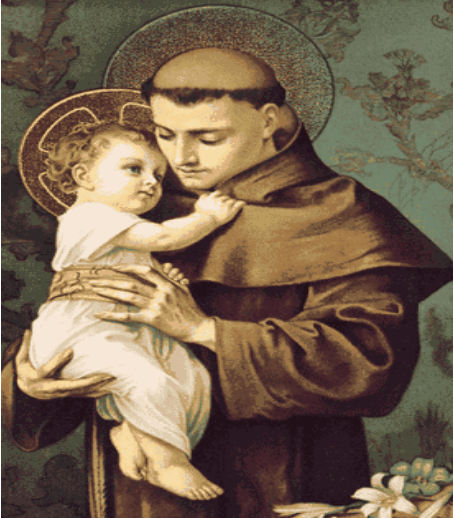
He is typically depicted with a book and the Infant Child Jesus and is commonly referred to today as the "finder of lost articles."

St Anthony is venerated all over the world as the Patron Saint for lost articles, and is credited with many miracles involving lost people, lost things and even lost spiritual goods.
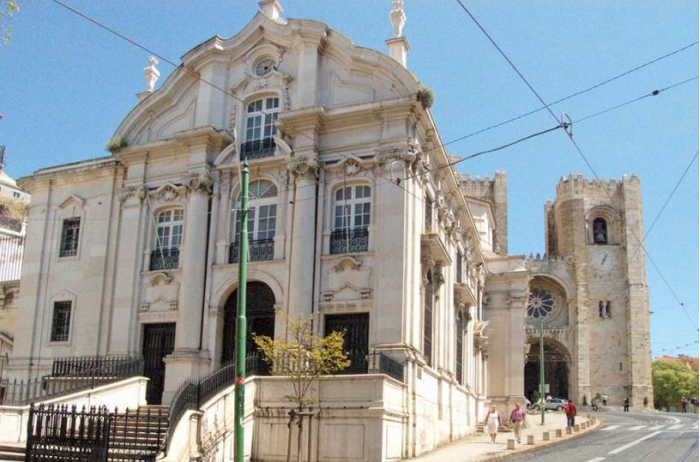
St. Anthony’s Church Lisbon
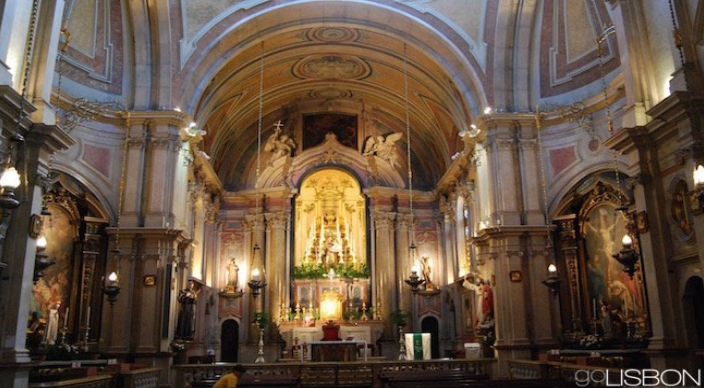
Inside St. Anthony’s Church in Lisbon. In which I celebrated Sunday Mass in there. With a group of our parishioners

By Webmaster February 14, 2026
Please pray for Our Sick : Margaret Callaghan Doreen Cleary, Michael Ritchie, Neil Boyle, John Rielly Molly Strang, James Clark, Fr. Michael McLaughlin, Patricia Henderson, Joanna Maier (Connecticut USA), Therese Gilgunn Tressy Callaghan, Suzanne McMurray, Mary Coyle, Lesley Watson (Spain) Maureen McHugh, Margaret Burke, Marie White, Kathleen Daly, John McGuire, Jill Brown, Karen Pritchatt, Louise Newton, Faith Lyndsey, Jill Brown, Marie McGuire, James Morton, Paul Kearney, Thomas Daly, Andrew McCluskey, Premature Baby Vincent McDowell, Bill Allan, Gudren Berk (Germany), Jaqueline McReynolds, Mary Morrison, Helen Howarth (Easterhouse), Margaret Loan, Avril McCluskey and all our sick.
By Webmaster February 14, 2026
Ash Wednesday 18th February What is Ash Wednesday? Ash Wednesday is the first day of Lent—and a wonderful opportunity to make yourself 100% available to God! How available to God are you? 50%? 75%? 96.4%? No matter what your answer, Ash Wednesday is the perfect time to decide that you will spend this Lent increasing that number. On Ash Wednesday, you can get your forehead blessed with ashes at Mass or a prayer service. These ashes are a reminder that we need to repent. Repentance is a powerful invitation. When John the Baptist first appeared in the desert of Judea, this was his message: “Repent, prepare the way of the Lord” (Matthew 3:2). Later, when Jesus began his ministry, he led with this message: “Repent, for the kingdom of heaven is at hand” (Matthew 4:17). But what does it mean for us to repent, here and now, more than two thousand years later? It means the same as it did to the people walking around the dusty pathways in their sandals, trying to inch closer to Jesus as he passed through their town or village. Repent means “to turn back to God.” We all find ourselves needing to turn back to God many times a day, in ways small and large. It is not a matter of guilt and it is not a shameful thing. It is simply that we are a better version of ourselves when we return to his side!  Ash Wednesday Mass Times 18th February: Masses 7am, 10am & 6pm
By Webmaster February 14, 2026
The Sermon on the Mount continues as the focus of the Gospel readings during Winter Ordinary Time, and today’s passage from Matthew chapter 5 contains some of the most challenging verses in the Gospel. Before turning to that teaching, however, let’s consider the other readings. The First Reading comes from the Book of Sirach, also known by its Latin title Ecclesiasticus, or “Church Book,” so called because the early Church made extensive use of this wisdom text in moral instruction for catechumens and the faithful. Sirach reflects powerfully on moral freedom: If you choose, you can keep the commandments; they will save you. Before you are life and death, good and evil; whichever you choose shall be given you. Freedom of the will is one of God’s greatest gifts. God places before us the choice between good and evil and invites us to choose life. What is equally clear is that God does not choose sin or injustice on our behalf. The responsibility for our moral choices rests with us. The Second Reading continues from Saint Paul’s First Letter to the Corinthians. Writing to a Christian community surrounded by moral confusion, Paul reminds them that true wisdom does not come from the world, but from God: What eye has not seen and ear has not heard… what God has prepared for those who love him, God has revealed through the Spirit.  This reading complements Sirach beautifully. If the First Reading emphasizes our freedom to choose, the Second reminds us that God does not leave us unassisted. Through the grace of the Holy Spirit, God prepares us to live according to divine wisdom rather than worldly standards. Together, these readings lead us into today’s Gospel. Jesus makes it clear that he has not come to abolish the Law, but to fulfill it. He then calls his disciples to a righteousness that surpasses that of the scribes and Pharisees – not through legal technicalities, but through holiness of heart. Jesus’ striking examples – equating anger with murder and lust with adultery – may sound harsh to modern ears. Yet Matthew presents these teachings to a Jewish Christian community still shaped by strict legal interpretation. Jesus’ strong language is meant to awaken his listeners to the truth that holiness requires more than outward observance. It calls for an interior conversion, where the heart itself is transformed by God’s grace.
By Webmaster February 14, 2026
Our Recently Dead Thomas Gallacher, Frank Cook, John Harkins, Bridie McKechnie, Mary Irvine, Frances Drummond, Mary McCrudden, Paul McGoldrick, Kevin McMahon, Christine Divers (Glasgow), Ellen Thomson (Glasgow), Eugene McVay, Catherine Chrighton (Holytown), James Neary, Campbell McFall (St. Ninian's), John Monaghan, John Collin Month Minds & Anniversaries John Corns, James, Ruby & Mary McDaide, Elizabeth & Stuart Johnston, Margaret Fox, Laraine Fox, Christine Archibald, Ann Rodgers, Hugh Rodgers, Giovanni Battiste Fionda, Marie Carmen Fionda, Johny D'Ambrosio, Margaret D'Ambrosio Please if you could make sure all month minds and anniversaries are handed in no later than Wednesday Night. If they come in after that they will be read out at Mass on Sunday. If the recently dead come in after the Wednesday deadline they too will be read out at Mass on the Sunday
By Webmaster January 30, 2026
Mass of the Sick Saturday 14th February 10am Mass Ash Wednesday 18th February: Masses 7am, 10am & 6pm Sacramental Meetings Tuesday 24th February St. Peter's & St. Mark's 6pm First Confession 6.30pm First Communion  7pm Confirmation Meetings will take place in the Church
By Webmaster January 30, 2026
If you wish to sign up for Gift Aid. It is a great way to help the parish financially, costing you absolutely nothing. If you wish to sign up contact myself or Doreen Lee and we will give you the form and hand it back as you can and we can get it organised. As I said it costs you nothing, but helps the parish so much.
By Webmaster January 30, 2026
I am looking for Volunteers to move the power-points on during the Sunday Masses, Vigil 4pm, 9.30am & 11am. It is very easy to operate, if we get enough volunteers for each Mass we would put a wee rota together. It would take a wee bit of pressure off me.
By Webmaster January 24, 2026
The “Year of St Francis of Assisi”, was proclaimed by Pope Leo, in Rome to mark the 800th Anniversary of St Francis’ death in 2026. I am proposing to put a statue of St. Francis in the Church for this jubilee year. This is from EWTN Pope Leo XIV has proclaimed a “Special Year of St. Francis” to commemorate the 800th anniversary of the saint’s death. During this time of grace, which will extend until January 2027, the faithful are granted the opportunity to obtain a plenary indulgence . This Franciscan Jubilee Year, considered a gift for the entire Church and an occasion for authentic spiritual renewal, was inaugurated on Jan. 10 with a decree issued by the Apostolic Penitentiary of the Holy See. Until Jan. 10 of next year, the faithful can obtain this grace under the usual conditions — sacramental confession, Communion, and prayer for the intentions of the pope — by making a pilgrimage to any Franciscan conventual church or place of worship dedicated to St. Francis anywhere in the world. Furthermore, the elderly, the sick, and those who, for serious reasons, cannot leave their homes can obtain the plenary indulgence  by spiritually joining in the jubilee celebrations and offering their prayers, pains, or sufferings to God.
By Webmaster January 17, 2026
Mass of the Sick Saturday 14th February 10am Mass Ash Wednesday 18th February more details to follow.
By Webmaster January 17, 2026
The Second Sunday of the Year A, falling on January 18, 2026, is known as the Second Sunday in Ordinary Time, featuring readings from Isaiah (calling the Messiah a shoot from Jesse), 1 Corinthians (emphasizing unity in Christ), and John's Gospel (John the Baptist identifying Jesus as the Lamb of God who takes away the sin of the world). This Sunday marks a shift after Christmas and Epiphany into the regular flow of Ordinary Time, focusing on discipleship, God's calling, and Jesus's identity as revealed through the Baptist. Key Readings (Year A): ● First Reading : Isaiah 49:1-7 (The Servant Song, foretelling the Messiah's mission). ● Responsorial Psalm : Psalm 40 (A response of praise and commitment). ● Second Reading : 1 Corinthians 1:1-9 (Paul's greeting and call to unity). ● Gospel : John 1:29-42 (John the Baptist points to Jesus as the Lamb of God). Themes & Focus: ● The Calling of Disciples : The Gospel highlights Jesus's first disciples (Andrew and another) meeting and following Him. ● Identity of Jesus : The powerful declaration "Behold the Lamb of God" is central, connecting Jesus to sacrifice and redemption. ● Unity in Christ: 1 Corinthians speaks to the diverse people called to be saints, united in Christ. ● Ordinary Time : Moving from festive seasons into regular liturgical focus on Christian life and growth. Context: ● This Sunday often coincides with the start of the Week of Prayer for Christian Unity.
Show More