Reflections on the Daily Readings 19th July 2021

Webmaster • July 24, 2021

Monday 19th July


Read deeply


Sacred scripture is the living word of God, and the ancient monastic practice of lectio divina (Latin for “divine reading”) is a contemplative way of “conversing” with it. It involves four basic steps: lectio ("reading”), meditatio ("meditation”), oratio ("prayer”), and contemplatio ("contemplation”). By narrowing in on certain passages, reading them slowly and repeatedly, noticing what stirs you, and reflecting prayerfully on it, you can grow closer in personal relationship with God. To learn more about lectio divina, read Open Heart, Open Mind by Trappist monk Father Thomas Keating, O.C.S.O.


Today's readings: Exodus 14:5-18; Matthew 12:38-42 “Teacher, we wish to see a sign from you.”


Tuesday 20th July


Special needs evoke special support


On this day in 1968, the first Special Olympics took place in Chicago. The brainchild of Eunice Kennedy Shriver—devout Catholic, sister of President John F. Kennedy, and tireless advocate for people with intellectual disabilities. Shriver’s husband, Sargent Shriver—as a Knight of Columbus—encouraged the Knights to support the cause, of the Special Olympics.


Today's readings: Exodus 14:21—15:1; Matthew 12:46-50 (396). “Whoever does the will of my heavenly Father is my brother, and sister, and mother.”


Wednesday 21st July


Choose wisely and well


Good preachers know that if they tell a story as part of a sermon, their people are more likely to remember the message. Such preachers take their lead from the master storyteller. Jesus used stories, often parables with a lesson, to help listeners then and now understand what really matters in his Father’s kingdom. As the Catechism of the Catholic Church reminds us, “the simple images of the parables . . . confront the hearer with a radical choice (about) entering the kingdom of God.” Do not get lost in the details, but rather see the choice the stories provide. Will you be the seed that grows in good earth? Or will you die among the thorns? Choose love and bear much fruit.


Today's readings: Exodus 16:1-5, 9-15; Matthew 13:1-9 “But some seed fell on rich soil, and produced fruit.”


Thursday 22nd July


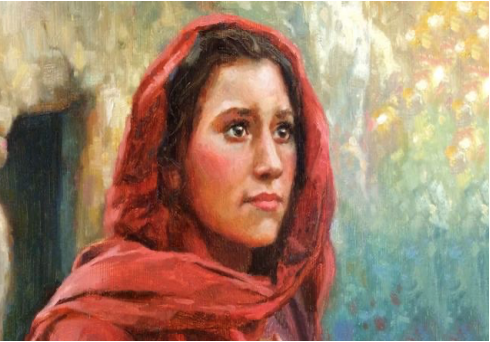
Feast Of Mary Magdalene

Grace under pressure


Mary Magdalene is often referred to as “Apostle to the Apostles.” The gospels attest to the fact that she did not abandon Christ on the cross, and in several gospel accounts she is the first witness to the Resurrection, bringing the news to the other apostles. Despite her loyalty and stature, ironically she is not mentioned in the Holy Week liturgies. However, the church in 2016 set a feast day in her honor. On that feast today, reflect on your own loyalty to Christ: Can you be unwavering even under pressure, as was Mary Magdalene?


Today's readings: Song of Songs 3:1-4b or 2 Corinthians 5:14-17; John 20:1-2, 11-18 (603). “Mary Magdalene went and announced to the disciples, ‘I have seen the Lord.’”


Friday 23rd July


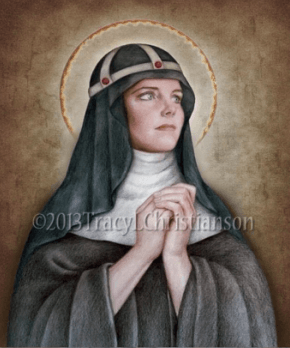
Memorial Of Bridget, Religious

Love, embodied


It’s great to have a deep connection with another person no matter what kind of relationship it may be. Birgitta Petersson (later known as Saint Bridget of Sweden) found this in Ulf Gudmarsson, whom she married while both were very young. Early on in their relationship they were focused on raising a family of eight with each maintaining a job outside the home. Their relationship and love grew over time with each other and with God. A major bonding experience came when together they made a pilgrimage to Santiago de Compostela, a popular religious destination in northwestern Spain. Years later when Ulf died, Birgitta reportedly said that she had “loved him like my own body.” Take time to strengthen the bonds of your own loving relationships.


Today's readings: Exodus 20:1-17; Matthew 13:18-23 (399). “The seed sown on rich soil is the one who hears the word and understands it, who indeed bears fruit.”
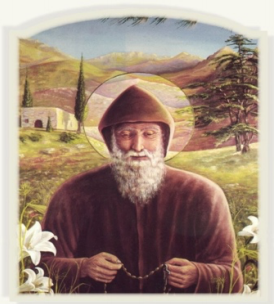

Saturday 24th July


Memorial Of Sharbel Makhlūf, Priest

A quiet mystic speaks to our age


Saint Sharbel Makhlūf (1828-98) was a Maronite monk and priest in Lebanon, renowned for his quiet holiness. On the occasion of his beatification in 1965, the Eastern Catholic hermit was described by Saint Pope Paul VI as “a new, eminent member of monastic sanctity,” who “through his example and his intercession is enriching the entire Christian people.” In the midst of busy, noisy life, make some time to hear the still, quiet voice. Recite the Jesus Prayer revered by the Eastern Church for centuries, now gaining adherents in the West, including Saint Pope John Paul II, who compared the meditative quality of the Jesus Prayer to the Rosary: "Lord Jesus Christ, Son of God, have mercy on me, a sinner."


Today's readings: Exodus 24:3-8; Matthew 13:24-30 (400). “If you pull up the weeds you might uproot the wheat along with them. Let them grow together until harvest.”


By Webmaster • September 18, 2026
Please pray for Our Sick : Margaret Callaghan Doreen Cleary,Neil Boyle, John Rielly, Molly Strang, James Clark, Fr. Michael McLaughlin, Patricia Henderson, Joanna Maier (Connecticut USA), Therese Gilgunn Tressy Callaghan, Suzanne McMurray, Marie White,Lesley Watson (Spain) John McGuire, Maureen McHugh,Margaret Burke, Kathleen Daly, Jill Brown, Karen Pritchatt, Louise Newton, Faith Lyndsey, Marie McGuire, James Morton, Paul Kearney, Thomas Daly, Andrew McCluskey, Premature Baby Vincent McDowell, Gudren Berk (Germany), Jaqueline McReynolds, Mary Morrison, Helen Howarth (Easterhouse), Margaret Loan, Avril McCluskey, Carol Corr, Thomas Kennedy, Margaret Park, Alana Hepburn, Michael Ritchie, Hugh O'Donnell, and all our sick. .
By Webmaster • September 18, 2026
 24th October Mass of the Sick 10am Mass 7th November Annual Mass for the Dead 10am Mass
By Webmaster • September 18, 2026
First Reading Isaiah 55:6-9 God's ways are far beyond the ways of human beings. Responsorial Psalm Psalm 145:2-3,8-9,17-18 God is near to those who call upon him. Second Reading Philippians 1:20c-24,27a Paul tells the Philippians to live for Christ. Gospel Reading Matthew 20:1-16 In the parable of the workers in the vineyard, Jesus teaches about God's generous mercy. Background on the Gospel Reading In today's Gospel, Jesus moves from Galilee to teach in Judea where he is sought out by great crowds and tested by the Pharisees on issues such as marriage and divorce. Jesus also encounters a rich young man who is unable to accept Jesus' demand that he leave his possessions to follow him. Jesus' response to the rich young man sounds very much like the conclusion we will find in today's Gospel: the first will be last and the last will be first. On the surface, the parable of the workers in the vineyard appears to be an offense to common sense. Those who work a longer day ought to be paid more than those who work just an hour or two. When viewed in this way, the landowner seems unfair. That is because we are reading into the parable our own preconceived notions of how fairness and equality should be quantified. A close read shows us that the landowner paid on the terms that were negotiated. The landowner, it seems, has acted completely justly. The parable goes beyond that, however, and we come to see that the landowner is not simply just, he is exceptionally just. He is radically just. He has given those who labored in the field for a full day their due pay. But he has also given a full-day's wage to those who worked only a single hour. No one is cheated, but a few receive abundantly from the landowner just as we receive from God more than what is merely justifiable or due. God, like the landowner, is radically just and abundantly generous. The workers who complain are made to look foolish as they lament the fact that landowner has made all workers equal. Indeed, what more could one ask for than to be treated as an equal at work or anywhere else?  The parable reminds us that although God owes us nothing, he offers abundantly and equally. We are occasionally tempted to think that our own actions deserve more reward, more of God's abundant mercy, than the actions of others. But God's generosity cannot be quantified or partitioned into different amounts for different people. When we think that way, we are trying to relate to God on our terms rather than to accept God's radically different ways.
By Webmaster • September 18, 2026
Our Recently Dead Rosemarie Burns, Thomas McNutt Month Minds & Anniversaries Betty King, Ann Durnian, Elizabeth & Stuart Johnston, Aldo Valente, Maureen Sheridan, James Whyte, Pat Dougan Please if you could make sure all month minds and anniversaries are handed in no later than Wednesday Night. If they come in after that they will be read out at Mass on Sunday. If the recently dead come in after the Wednesday deadline they too will be read out at Mass on the Sunday
By Webmaster • September 18, 2026
From Friday 25th September to Sunday 4th October. St. Francis' Peace Prayer will be said at the end of every Mass. Monday 28th September A Parish Mass for St. Peter's in St. John Olgivie Church7pm. Veneration of Relic of St. Francis' at the End of the Mass. I will celebrate the Mass. Bus will be available to take you to St. John Olgivie's if you do not have transport. List at back of the Church. Sunday 4th October Feast of St. Francis of Assisi Blessing of Pets After 11am Mass
By Webmaster • September 4, 2026
If you wish to sign up for Gift Aid. It is a great way to help the parish financially, costing you absolutely nothing. If you wish to sign up contact myself or Doreen Lee and we will give you the form and hand it back as you can and we can get it organised. As I said it costs you nothing, but helps the parish so much.
By Webmaster • September 4, 2026
Coffee Morning Every Tuesday starting from 29th September in the Side Chapel after the 10am Mass.
By Webmaster • September 4, 2026
First Reading Ezekiel 33:7-9 The Son of Man is appointed as guardian of Israel. Responsorial Psalm Psalm 95:1-2,6-9 Song of praise to God, our salvation. Second Reading Romans 13:8-10 The Law is summarized in the commandment to love your neighbor as yourself. Gospel Reading Matthew 18:15-20 Jesus teaches his disciples how to settle disputes in the Church. Background on the Gospel Reading Today’s Gospel reading is taken from a chapter of Matthew’s Gospel, which is sometimes called the “discourse on the Church” or the “church order” discourse. In this part of Matthew’s Gospel, Jesus speaks more directly about matters of Church discipline and order. In today’s reading we find one of only three instances in which Jesus uses the word church in Matthew’s Gospel. In Matthew’s record of Jesus’ teaching, we can hear echoes of the kinds of issues faced by the early Christian community. In the first part of the “discourse on the Church” (Matthew 18:1-14), Matthew addresses the Christian community’s concerns about rank. Jesus responds to the disciples’ question about who is greatest in the kingdom of heaven. Jesus indicates that those who wish to enter the kingdom of heaven must be like children, and he cautions those leaders who might lead these “little ones” astray. He also responds with the parable of the lost sheep, indicating how God will seek out and bring back those “little ones” who have strayed. In today’s Gospel reading, Matthew 18:15-20, Jesus addresses a common occurrence in the Christian community: a dispute between two members of the Church. Jesus outlines a procedure for settling such matters fairly. The victim should privately address the offender and attempt to resolve the dispute without outside involvement. If that fails, then the victim should bring two or three witnesses and confront the offender again. If the dispute is still unresolved, the matter should be brought to the attention of the entire community. If the offender refuses to adhere to the reparations prescribed by the community, then Jesus suggests that the offender may be expelled from the Church.  Jesus does not discourage disagreement within the community of the Church; he acknowledges the reality of conflict and error and offers his disciples a means for addressing such matters. It is in the conclusion to this teaching that the message of hope is found: Jesus is present with the community and will guide the community in its relations. If decisions are taken in prayer, then the community can be assured of God’s assistance.
By Webmaster • August 28, 2026
First Reading Jeremiah 20:7-9 Jeremiah laments but cannot fail to speak in God’s name. Responsorial Psalm Psalm 63:2-6,8-9 Our souls yearn for God. Second Reading Romans 12:1-2 Paul encourages the Romans to stay faithful to God. Gospel Reading Matthew 16:21-27 Jesus speaks of his Passion and rebukes Peter for his objection. Background on the Gospel Reading Today’s Gospel continues the story that began in last week’s Gospel. Simon Peter was called the “rock” upon which Jesus would build his Church, and yet Peter continues to show the limitations of his understanding of Jesus’ identity. Now that the disciples have acknowledged that Jesus is the Messiah, Jesus confides in them the outcome of his ministry: he must suffer and die in Jerusalem to be raised on the third day. Peter rejects this prediction, and Jesus rebukes him severely, calling him “Satan.” In opposing this aspect of Jesus’ mission, Peter shows that he is no longer speaking based on the revelation from God but as a human being. Jesus then teaches all of the disciples about the difficult path of discipleship: to be Christ’s disciple is to follow in his way of the cross. Peter could not yet understand what it meant to call Jesus the Messiah. It is unlikely that the other disciples understood any better. Messianic expectations were a common aspect of first-century Judaism. Under Roman occupation, many in Israel hoped and prayed that God would send a Messiah to free the Jews from Roman oppression. The common view was that the Messiah would be a political figure, a king that would free Israel from Roman rule. This is perhaps what Peter envisioned when he was led to recognize Jesus as the Messiah. In this passage, however, Jesus is beginning to teach his disciples that he would be the Messiah in a different way.  Jesus would be more like the suffering servant described by the prophet Isaiah than the political liberator. Those who would be Jesus' disciples would be called to a similar life of service. Perhaps this is what Peter feared most in Jesus’ prediction of his Passion. He whom Jesus had called “rock” would also be called upon to offer himself in sacrifice and service to others. Christian leaders today are still called to sacrifice and serve others as Jesus did.
By Webmaster • August 28, 2026
There will be a change from this First Friday 4th September. Before both schools came together for the First Friday. This has been the case since I arrived here in St. Peter's. This needs to change because of the numbers of pupils in St. Marks. And after discussion with both headteachers, the change will look like this. 4th September (First Friday Mass) St.Peter's: The Church St. Mark's: The School 2nd October: (First Friday Mass) St. Mark's: The Church St.Peter's: The School And it continue like this.
Show More