Breakfast with Santa
Webmaster • October 9, 2026
5th December
If anyone's workplace donate gifts for kids at Chrismas please keep St. Peter's Church in mind as we are organising Breakfast with Santa for over 100 children in the area free of charge and any support would be greatly appreciated.... also tombola gifts and selectoon boxes ...
.give Anne Frances a message or hand in to the church.

Please pray for Our Sick : Margaret Callaghan Doreen Cleary, Neil Boyle, John Rielly, Molly Strang, James Clark, Fr. Michael McLaughlin, Patricia Henderson, Joanna Maier (Connecticut USA), Therese Gilgunn Tressy Callaghan, Suzanne McMurray, Marie White, Lesley Watson (Spain) John McGuire, Jill Brown, Maureen McHugh,Margaret Burke, Paul Kearney, Kathleen Daly, Karen Pritchatt, Louise Newton, Faith Lyndsey, Marie McGuire, James Morton, Thomas Daly, Andrew McCluskey, Margaret Loan, Premature Baby Vincent McDowell, Gudren Berk (Germany), Jaqueline McReynolds, Mary Morrison, Helen Howarth (Easterhouse), Avril McCluskey, Carol Corr, Margaret Park, Thomas Kennedy, Alana Hepburn, Michael Ritchie, Hugh O'Donnell, May Brandon, Michelle McDade and all our sick. .
24th October Mass of the Sick 10am Mass 7th November Annual Mass for the Dead 10am Mass
Will be available in the porch from this weekend. Mass will be offered each day in November for those names included on the list. You may include an offering alongside the list in your envelope. And from Tuesday there will be a box in the porch to return them.
Week Day Mass from 7th October will be held in the side Chapel, Except for Funerals and when the children come to Mass.

Our Recently Dead David Cunningham, Sarah Dunnron, Daniel Coltrain (21yo) Month Minds & Anniversaries Liz Hannaway (Blantyre), Tomosz Klary, Rose Logan, Elizabeth Holton, Christie Archibald Please if you could make sure all month minds and anniversaries are handed in no later than Wednesday Night. If they come in after that they will be read out at Mass on Sunday. If the recently dead come in after the Wednesday deadline they too will be read out at Mass on the Sunday
Saint Teresa of Avila lived in an age of exploration as well as political, social, and religious upheaval. It was the 16th century, a time of turmoil and reform. She was born before the Protestant Reformation and died almost 20 years after the closing of the Council of Trent. The gift of God to Teresa in and through which she became holy and left her mark on the Church and the world is threefold: She was a woman; she was a contemplative; she was an active reformer. As a woman, Saint Teresa of Avila stood on her own two feet, even in the man’s world of her time. She was “her own woman,” entering the Carmelites despite strong opposition from her father. She is a person wrapped not so much in silence as in mystery. Beautiful, talented, outgoing, adaptable, affectionate, courageous, enthusiastic, she was totally human. Like Jesus, she was a mystery of paradoxes: wise, yet practical; intelligent, yet much in tune with her experience; a mystic, yet an energetic reformer; a holy woman, a womanly woman. Teresa was a woman “for God,” a woman of prayer, discipline, and compassion. Her heart belonged to God. Her ongoing conversion was an arduous lifelong struggle, involving ongoing purification and suffering. She was misunderstood, misjudged, and opposed in her efforts at reform. Yet she struggled on, courageous and faithful; she struggled with her own mediocrity, her illness, her opposition. And in the midst of all this she clung to God in life and in prayer. Her writings on prayer and contemplation are drawn from her experience: powerful, practical, and graceful. She was a woman of prayer; a woman for God. Teresa was a woman “for others.” Though a contemplative, she spent much of her time and energy seeking to reform herself and the Carmelites, to lead them back to the full observance of the primitive Rule. She founded over a half-dozen new monasteries. She traveled, wrote, fought —always to renew, to reform. In herself, in her prayer, in her life, in her efforts to reform, in all the people she touched, she was a woman for others, a woman who inspired and gave life. Her writings, especially the Way of Perfection and The Interior Castle, have helped generations of believers. In 1970, the Church gave her the title she had long held in the popular mind: Doctor of the Church. She and St. Catherine of Siena were the first women so honoured. Reflection : Ours is a time of turmoil, a time of reform, and a time of liberation. Modern women have in Teresa a challenging example. Promoters of renewal, promoters of prayer, all have in Teresa a woman to reckon with, one whom they can admire and imitate. Saint Teresa of Avila is the Patron Saint of: Relief from headaches
First Reading Isaiah 25:6-10a The Lord will provide richly for his people. Responsorial Psalm Psalm 23:1-6 The Lord is our shepherd. Second Reading Philippians 4:12-14,19-20 Paul tells the Philippians that God provides whatever he needs. Gospel Reading Matthew 22:1-14 (shorter form Matthew 22:1-10) Jesus compares the kingdom of heaven to a wedding feast. Background on the Gospel Reading Immediately after criticizing the religious leaders through the parable of the tenants in last Sunday’s Gospel, Jesus proceeded to tell another parable, again directed at the religious leaders. We hear this parable in today’s Gospel. In the parable of the wedding feast, Jesus offers an image of the kingdom of heaven using the symbol of a wedding banquet. In today’s first reading from the prophet Isaiah and in today’s psalm, the Lord’s goodness is evident in the symbol of a feast of good food and wine. Jesus’ listeners would have been familiar with the image of a wedding feast as a symbol for God’s salvation. They would consider themselves to be the invited guests. Keeping this in mind helps us to understand the critique Jesus makes with this parable. The context for this parable is the growing tension between Jesus and the Jewish religious leaders in Jerusalem. This has been the case for the past two Sundays and will continue to be true for the next several weeks. The parable Jesus tells is straightforward. The king dispatches his servants to invite the guests to the wedding feast that he is planning for his son. The listeners would have been surprised to learn that the first guests refused the invitation. Who would refuse the king’s invitation? A second dispatch of servants follows. Again to the listeners’ great surprise, some guests ignore the invitation. Some of the invited guests even go so far as to mistreat and kill the servants. The king invokes his retribution against these murderers by destroying them and burning their city. We might stop here for a moment. Why would some guests kill the servants sent to invite them to the king’s wedding feast? It might be possible that the king was a tyrant, evidenced by the destruction of the city of those who refused his invitation. But if we follow this idea, then the allegory seems to be about something other than the kingdom of heaven. It is more likely that the destruction of the city would have been a powerful image corresponding to the destruction of Jerusalem by the Romans in A.D. 70, which would have been an important event for Matthew’s audience. With the invited guests now deemed unworthy to attend the king’s wedding feast, the servants are sent to invite whomever they can find. The guests arrive, but it appears that accepting the king’s invitation brings certain obligations. The guest who failed to dress in the appropriate wedding attire is cast out of the feast. We are reminded that while many are invited to the kingdom of heaven, not all are able to meet its requirements. God invites us to his feast, giving us his salvation. Yet he asks us to repent for our sins. Jesus’ message in the parable cautions against exclusive beliefs about the kingdom of heaven. The parable also teaches about humility. Those who assume that they are the invited guests may find that they have refused the invitation, and so others are invited in their place. To accept the invitation is also to accept its obligations. God wants our full conversion in complete acceptance of his mercy.
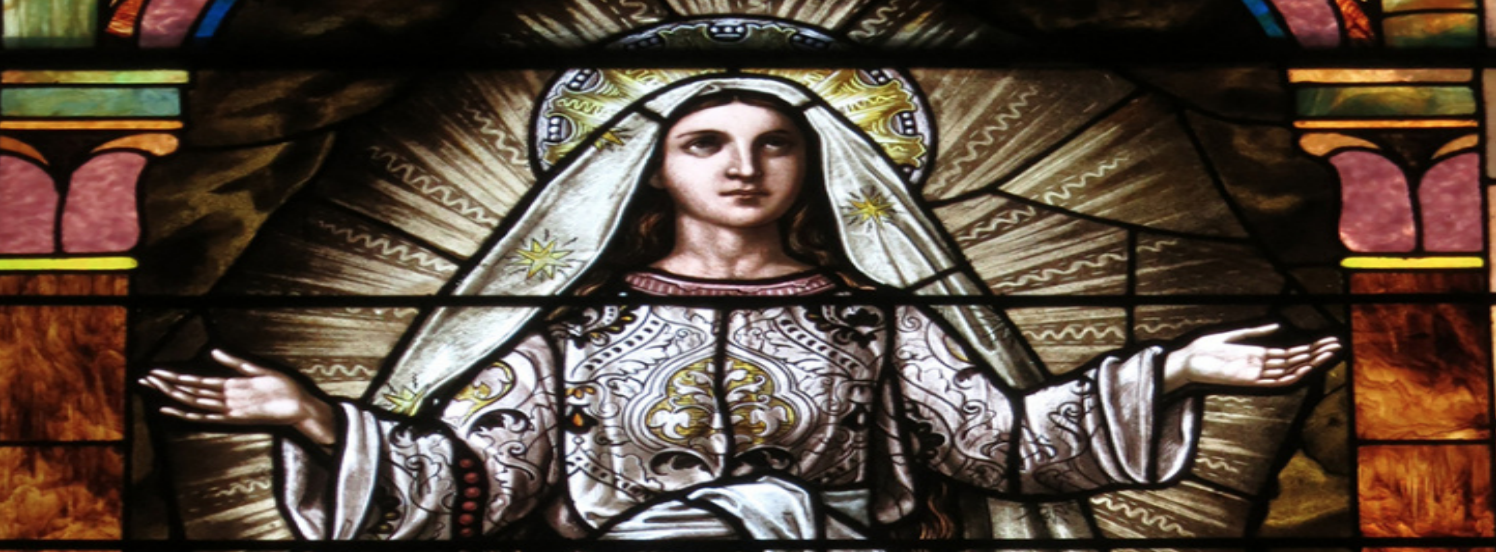
The Story of Our Lady of the Rosary Saint Pius V established the feast of Our Lady of Victory to thank God for the Christian defeat of the Turks at Lepanto—a victory attributed to praying the rosary . Pope Gregory XIII changed the name to Feast of the Holy Rosary–originally celebrated on the first Sunday in October–in 1573. Pope Clement XI extended the feast to the universal Church in 1716. And in 1913, Saint Pius X set the date for the feast that we know today of October 7. The development of the rosary has a long history. First a practice developed of praying 150 Our Fathers in imitation of the 150 Psalms. Then there was a parallel practice of praying 150 Hail Marys. Soon a mystery of Jesus’ life was attached to each Hail Mary. Though Mary’s giving of the rosary to Saint Dominic is recognized as a legend, the development of this prayer form owes much to the followers of Saint Dominic. One of them, Alan de la Roche, was known as “the apostle of the rosary.” He founded the first Confraternity of the Rosary in the 15th century. In the 16th century, the rosary was developed to consist of 15 mysteries: joyful, sorrowful and glorious. In 2002, Pope John Paul II added the five Mysteries of Light to this devotion. Reflection The purpose of the rosary is to help us meditate on the great mysteries of our salvation. Pius XII called it a compendium of the gospel. The main focus is on Jesus—his birth, life, death, and resurrection. The “Our Fathers” remind us that Jesus’ Father is the initiator of salvation. The “Hail Marys” remind us to join with Mary in contemplating these mysteries. They also make us aware that Mary was and is intimately joined with her Son in all the mysteries of his earthly and heavenly existence. The “Glory Bes” remind us that the purpose of all life is the glory of the Trinity. The rosary appeals to many. It is simple. The constant repetition of words helps create an atmosphere in which to contemplate the mysteries of God. We sense that Jesus and Mary are with us in the joys and sorrows of life. We grow in hope that God will bring us to share in the glory of Jesus and Mary forever.

Donated your spare winter coats or anoraks to The Rotary Club of Hamilton, helping us to support many local charities and community organisations which care for people who are homeless, escaping domestic violence, living in poverty, refugees. No money donations thanks, just drop off your coat(s) in the box whilst at Church Donate a coat during the month of October & sincere thanks
First Reading Ezekiel 18:25-28 It is possible to turn from sin and preserve one’s life. Responsorial Psalm Psalm 25:4-9 A prayer to God for mercy. Second Reading Philippians 2:1-11 (shorter form Philippians 2:1-5) Be like Christ who humbled himself and was exalted by God. Gospel Reading Matthew 21:28-32 Jesus poses a question to the chief priests and elders on the meaning of obedience. Background on the Gospel Reading The context for today’s Gospel is the mounting tension between Jesus and the Jewish religious leaders. Jesus has entered Jerusalem and overturned the money changers’ tables in the Temple. Jesus has caught the attention of the religious authorities; the chief priests and elders question Jesus about the source of his authority. Jesus refuses to name for these religious leaders the source of his authority. Instead, he questions the priests and elders through the parable we hear in today’s Gospel. The answer given by the religious leaders is correct, but it convicts them for their failure to heed the call of John the Baptist and for their inability to recognize the Kingdom of God. The situation Jesus poses is rather straightforward. Given the same task by their father, one son asserts his disobedience in words, but then obeys in his actions; the second son obeys with his words, but disobeys in his actions. The question that Jesus poses is pointed and direct: Which son did what the father wanted? All would agree that “actions speak louder than words” and that even if his words were disobedient, the son who did the work as ordered did the father’s will. Jesus’ conclusion is also direct. The chief priests and elders, the ones who speak most often about God, did not act accordingly. They did not respond to the message of repentance announced by John the Baptist with a change of heart. Instead, John’s message was heeded by those one would not expect to repent—tax collectors, prostitutes, and other sinners. Because of their actions, these sinners will enter the Kingdom of God ahead of the religious leaders. Jesus could ask us the same question. Do our words indicate our obedience to God? If not our words, do our actions? God desires a full conversion of heart, that our actions (and our words as well) will give evidence of our love for God.